
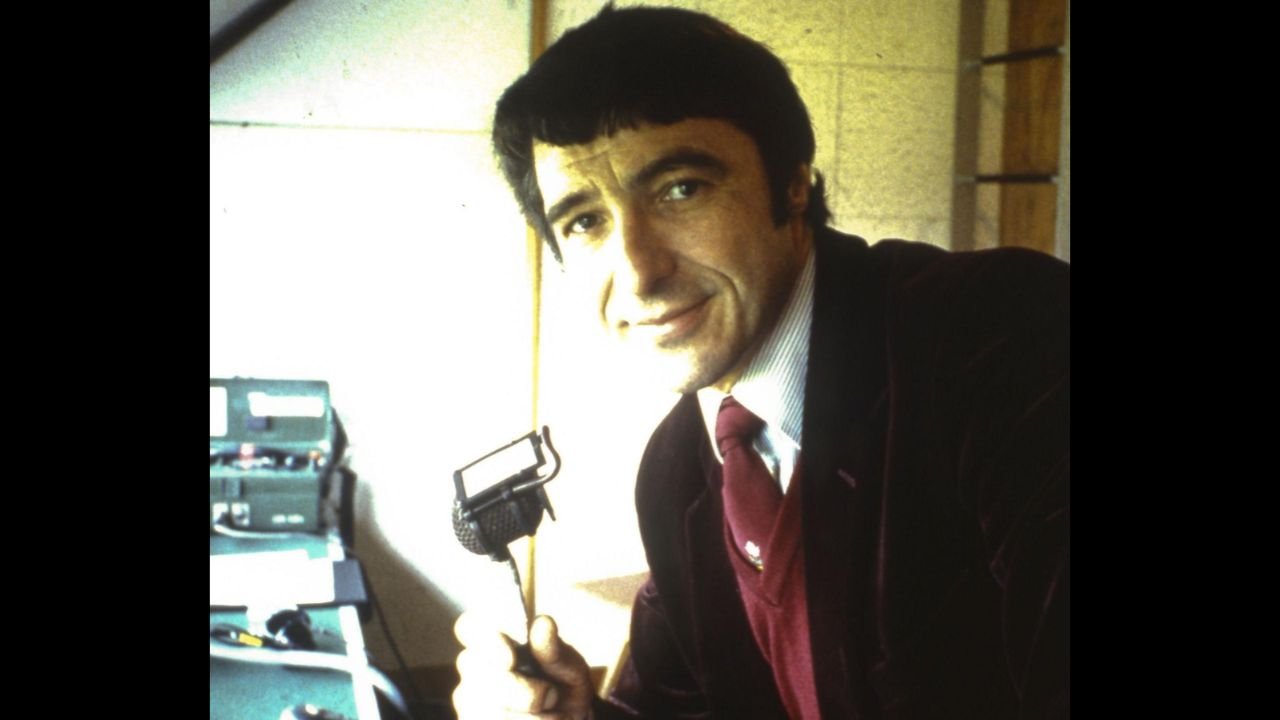
Former England rugby union international and renowned BBC commentator Nigel Starmer-Smith died on November 26, 2026, aged 81, following an 11-year battle with frontotemporal dementia. His son, Charlie Starmer-Smith, confirmed that his father passed away peacefully. Remembered for his achievements on the rugby field and distinguished broadcasting career, Starmer-Smith was among the most familiar voices in British rugby for several decades.
Nigel Starmer-Smith’s Death
The death of Nigel Starmer-Smith marks the loss of an influential figure in international rugby broadcasting.
His family confirmed his passing after more than a decade of living with dementia, a condition that gradually affected his health following his diagnosis in 2015.
Starmer-Smith enjoyed a remarkable professional journey, progressing from representing England as a scrum-half to becoming an internationally recognised sports commentator.
His extensive knowledge of rugby, distinctive commentary style and ability to explain the game earned him respect among players, broadcasters and generations of supporters.
Cause of Death
Nigel Starmer-Smith died following a prolonged battle with frontotemporal dementia, a progressive neurological condition affecting areas of the brain associated with behaviour, personality and language.
He was diagnosed in 2015 and lived with the condition for approximately 11 years.
Unlike some other forms of dementia, frontotemporal dementia can develop relatively early and significantly affect communication and everyday functioning.
His family became involved in raising awareness of the condition, supporting charitable initiatives dedicated to dementia research and assistance for affected families.
Early Life
Nigel Starmer-Smith was born on December 25, 1944, in Cheltenham, Gloucestershire, England.
He developed an interest in rugby during his younger years before establishing himself as a talented scrum-half.
His association with Oxford University provided an important foundation for his sporting career. Playing university rugby allowed him to develop the technical understanding and competitive experience required to progress to higher levels.
His subsequent involvement with prominent rugby institutions helped establish his reputation within English rugby.
England Rugby Career
Starmer-Smith represented England at international level between 1969 and 1971, earning seven international caps.
He made his England debut in 1969 during a historic victory against South Africa. The result was particularly significant because it marked England’s first-ever win over the Springboks.
As a scrum-half, he occupied a position requiring quick decision-making, accurate passing and effective communication between forwards and backs.
Beyond his international appearances, Starmer-Smith played for Oxford University, Harlequins and the Barbarians.
Although his England career was relatively brief, his experiences at the highest level provided valuable knowledge that would later influence his broadcasting work.
He retired from competitive rugby in 1976.
BBC Broadcasting Career
Following his playing retirement, Starmer-Smith established himself as one of British rugby’s most recognisable broadcasters.
He became particularly associated with the BBC’s Rugby Special, a programme that brought rugby highlights, analysis and interviews into households across Britain.
Starmer-Smith presented Rugby Special for 15 years, helping audiences follow domestic and international competitions during an era when televised rugby coverage was considerably less extensive than today.
His background as an international player enabled him to explain tactical decisions and technical aspects of the sport with authority.
Rather than simply describing the action, he brought an experienced player’s understanding to his coverage, making complicated passages of play accessible to viewers.
Rugby World Cup
One of the memorable chapters of Starmer-Smith’s broadcasting career came during the 2003 Rugby World Cup in Australia.
Working as a commentator for ITV, he covered the tournament in which England secured its first Rugby World Cup title.
England’s dramatic victory over Australia in the final became one of the defining moments in British sporting history.
Starmer-Smith also became closely associated with international rugby sevens, providing commentary on the IRB Sevens World Series.
His broadcasting experience extended beyond rugby, with assignments covering the Olympic Games, Commonwealth Games and Wimbledon for the BBC.
Journalism and Books
Alongside television commentary, Starmer-Smith maintained a successful career in sports journalism.
He served as the editor of Rugby World magazine, contributing to the publication’s coverage of international competitions, players and developments within the sport.
He also authored several rugby books and annuals, documenting important sporting events and sharing his understanding of the game.
His written work complemented his broadcasting career, preserving aspects of rugby history for readers and enthusiasts.
Family and Dementia
Starmer-Smith’s dementia diagnosis brought significant changes to his family life.
His son, Charlie Starmer-Smith, followed a career in journalism and broadcasting while becoming involved in charitable efforts supporting dementia research.
Inspired by his father’s experiences, Charlie released charity music singles to raise funds for the Alzheimer’s Society.
The family’s advocacy helped draw attention to the difficulties experienced by people living with dementia and those responsible for their care.
Their efforts also highlighted the importance of continued research into neurological conditions.
Rugby Legacy
Nigel Starmer-Smith leaves behind a sporting legacy that extends far beyond his seven England appearances.
His contributions as a player, presenter, commentator, journalist and author helped shape how rugby was covered and understood by television audiences.
For many supporters, his voice became inseparable from memorable international matches and weekend rugby highlights.
From England’s historic victory over South Africa in 1969 to its Rugby World Cup triumph in 2003, Starmer-Smith witnessed some of the country’s most important rugby milestones from both sides of the sporting profession.
His passing closes a distinguished chapter in British sports broadcasting, but his contribution to rugby remains an enduring part of the game’s history.